
Cast iron
vs Stainless steel
Structural advantages beyond corrosion resistance
Cast iron vs stainless steel components is fundamentally a comparison between structural efficiency and corrosion resistance.
Stainless steel is typically selected for its corrosion performance and suitability in hygienic environments. Cast iron is selected for stiffness, vibration damping and cost-efficient structural stability, reflecting the broader structural advantages of cast iron in industrial applications.
Within the broader advantages of cast iron, this distinction is critical. In many industrial systems, structural integrity, dimensional predictability and lifecycle economics influence performance more consistently than corrosion resistance alone.
In engineering evaluation, the decisive factor is therefore not material prestige or perceived durability, but how material behaviour affects long-term system stability, production scalability and total cost of ownership.
Rethinking material selection assumptions
Stainless steel often carries a perception of premium performance. In aggressively corrosive or hygienic environments, that perception is justified. However, a large proportion of industrial applications operate in controlled or semi-controlled environments where corrosion exposure is limited, predictable or manageable through coatings and design measures.
In these contexts, stiffness, damping capacity and economic scalability frequently outweigh inherent corrosion resistance. Similar structural trade-offs are explored in cast iron vs aluminium components, where stiffness efficiency often outweighs density advantages. When material selection defaults to maximum corrosion protection without quantified exposure analysis, the structural advantages of cast iron may be overlooked.
Engineering decisions should therefore reflect actual operating conditions rather than assumed worst-case scenarios.
Fundamental material behaviour under load
Cast iron and stainless steel differ significantly in stiffness behaviour, damping capacity and cost structure.
Typical material characteristics illustrate the structural contrast.
Young’s modulus for cast iron is approximately 160–180 GPa, while stainless steel ranges from roughly 190–210 GPa.
Density for cast iron is typically 7.0–7.3 g/cm³, compared to 7.7–8.0 g/cm³ for stainless steel.
The thermal expansion coefficient of cast iron is generally 10–12 µm/mK, whereas stainless steel expands at approximately 16–17 µm/mK.
Although stainless steel offers slightly higher elastic modulus and strong tensile performance, system stiffness in real components is influenced not only by modulus, but also by geometry, damping behaviour and thermal stability.
Cast iron offers very high compressive strength and superior vibration damping, particularly in grey iron grades. In structurally loaded housings, frames and bases, these characteristics often contribute more directly to operational stability than tensile strength alone.
This is where the structural advantages of cast iron become evident.
Technical and commercial matrix
| Parameter | Cast iron (EN-GJL / EN-GJS | Stainless steel (e.g. 304 / 316) |
| Density | Moderate | High |
| Stiffness (E-modulus) | High | Very high |
| Vibration damping | Very high (grey iron) | Low |
| Compressive strength | Very high | High |
| Tensile strength | Moderate to high (grade dependent) | High |
| Corrosion resistance | Moderate (can be coated) | Excellent |
| Thermal expansion | Low | Moderate |
| Machinability | Good | More demanding |
| Raw material cost | Relatively stable | High and alloy-dependent |
| Recycled content potential | High | High, but alloy-dependent |
| Best suited for | Stiff, vibration-sensitive structures | Corrosive or hygienic environments |
The matrix clarifies a central point: stainless steel primarily solves corrosion challenges, while cast iron often optimises structural stability, damping efficiency and cost predictability.
Structural performance and damping
Grey cast iron provides inherent vibration damping due to its graphite microstructure. The performance range within the material family is further detailed in ductile cast iron vs grey cast iron, where graphite morphology expands structural capability. Ductile iron combines strength with moderate damping capacity.
Stainless steel, while strong in tension, has limited internal damping. In dynamic systems such as pumps, compressors, gear housings or machinery bases, this can increase vibration transmission and acoustic output.
Where vibration influences fatigue development, machining precision or operator comfort, damping becomes commercially relevant. The inherent damping advantage of cast iron can therefore reduce long-term mechanical stress and improve operational robustness.
In many industrial systems, this stability is more critical than corrosion resistance.
Real requirement versus perceived requirement
Stainless steel’s key advantage is resistance to corrosion without additional coatings. This is particularly critical in marine environments, food and pharmaceutical processing facilities, chemical exposure applications and high-humidity or washdown systems where material degradation must be minimised to ensure safety and compliance.
However, in enclosed industrial machinery, structural housings or controlled production environments, corrosion exposure is often moderate and predictable.
In such cases, protective coatings, surface treatments or design modifications can allow cast iron to provide sufficient durability at lower total system cost.
Engineering evaluation should therefore quantify corrosion severity rather than default to maximum resistance. When exposure is limited, the structural advantages of cast iron frequently outweigh the incremental corrosion protection of stainless steel.
Economic implications across lifecycle
Stainless steel carries higher raw material cost due to alloying elements such as chromium and nickel. Price volatility is linked to global commodity markets and geopolitical supply dependencies.
Cast iron typically offers lower material cost and strong recyclability within stable scrap-based supply streams.
At medium to high production volumes, cast iron frequently strengthens total cost of ownership by enabling part consolidation, reducing machining time and lowering vibration-related service exposure. Stainless steel may increase machining complexity and material expenditure, particularly in large structural components where high alloy content drives cost.
Lifecycle economics must therefore include maintenance requirements, corrosion mitigation strategy, structural performance and supply stability — not simply material price per kilogram.
In many structural systems, the comparison also extends beyond material selection to process choice, as discussed in cast iron vs welded components, where fabrication complexity and consolidation potential significantly influence lifecycle economics.
This broader perspective consistently highlights the scalable advantages of cast iron in industrial applications.
When cast iron is the right choice
Cast iron is commercially optimal when structural stability, vibration damping and cost efficiency are the primary performance drivers, and where corrosion exposure is moderate or controlled.
In many industrial systems, the key requirement is not maximum corrosion resistance, but stable operation under mechanical and thermal load. Here, cast iron ensures reliable alignment, high damping and predictable dimensional behaviour across production.
Where corrosion can be managed through coatings or design measures, the trade-off shifts toward overall system performance and lifecycle cost. In such cases, the structural and economic advantages of cast iron often outweigh the additional corrosion resistance of stainless steel.
Recognising these conditions clarifies where cast iron delivers superior long-term value
Sustainability and supply considerations
Both materials can incorporate recycled content. However, stainless steel production relies on alloying elements with global supply dependencies and energy-intensive refining processes.
Cast iron production is largely scrap-based and increasingly supported by renewable electricity and closed-loop sand systems in modern foundries such as BIRN.
From an ESG perspective, material selection should consider durability, energy intensity, supply chain resilience and exposure to critical alloy materials. In durability-driven industrial systems, long service life and structural robustness may contribute more to sustainability than maximum corrosion resistance.
Sustainability performance depends on application context rather than material prestige.
Engineering decision priorities
When evaluating cast iron vs stainless steel components, corrosion exposure severity, structural stiffness requirements, vibration sensitivity, machining scalability and total cost of ownership must be assessed together.
Material selection is a structural risk-management decision. The optimal solution reduces operational uncertainty while maintaining manufacturability and cost efficiency.
In many industrial OEM applications, the structural and economic advantages of cast iron become decisive once corrosion exposure is realistically quantified.
Structured feasibility assessment
Cast iron and stainless steel address different performance priorities.
Stainless steel mitigates corrosion risk. Cast iron optimises structural stability, damping performance and economic scalability. These characteristics underpin the broader advantages of cast iron across industrial applications.
Within the broader advantages of cast iron, stiffness efficiency, vibration damping and supply stability form a consistent value proposition across non-corrosive industrial systems.
If stainless steel is currently specified due to assumed corrosion exposure, a structured casting feasibility assessment can determine whether coated cast iron provides sufficient durability while strengthening stiffness, damping behaviour and lifecycle cost performance.
At BIRN, such evaluations combine materials expertise, foundry process control and commercial modelling to clarify trade-offs objectively.
Early-stage analysis maximises both technical robustness and financial impact.
FAQ - Ductile cast iron vs grey cast iron
In tensile strength, stainless steel often exceeds grey iron. In compressive strength and vibration damping capacity, cast iron can offer significant advantages depending on grade.
Does cast iron always require coating? In many environments, yes. However, modern coating systems can provide durable protection where corrosion exposure is moderate and predictable.
Stainless steel typically carries higher raw material cost due to alloying elements and machining complexity.
Cast iron provides significantly higher inherent damping, contributing to improved stability in dynamic systems.
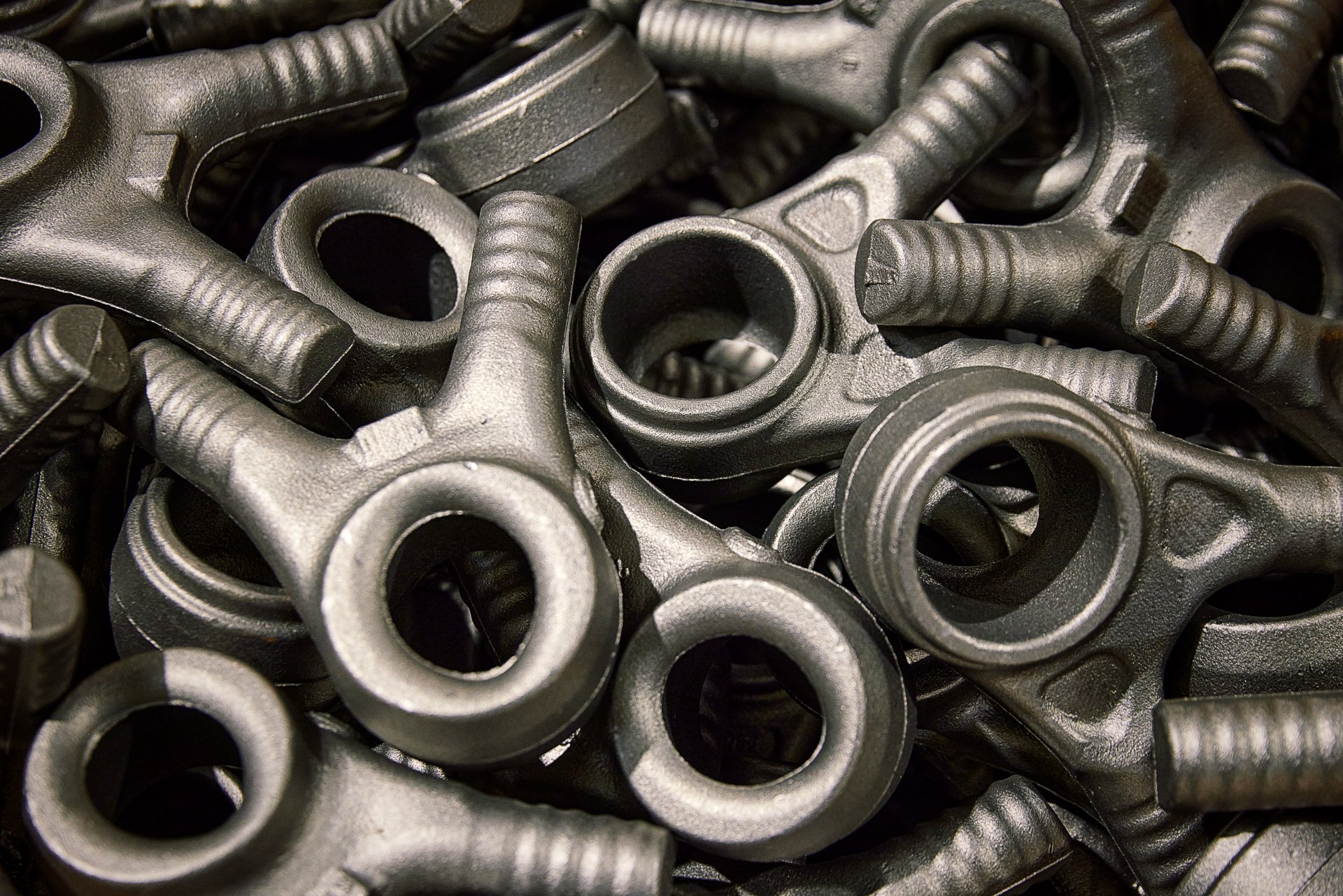
Ductile (nodular) cast iron vs grey cast iron
Learn the differences between ductile- and grey cast iron.
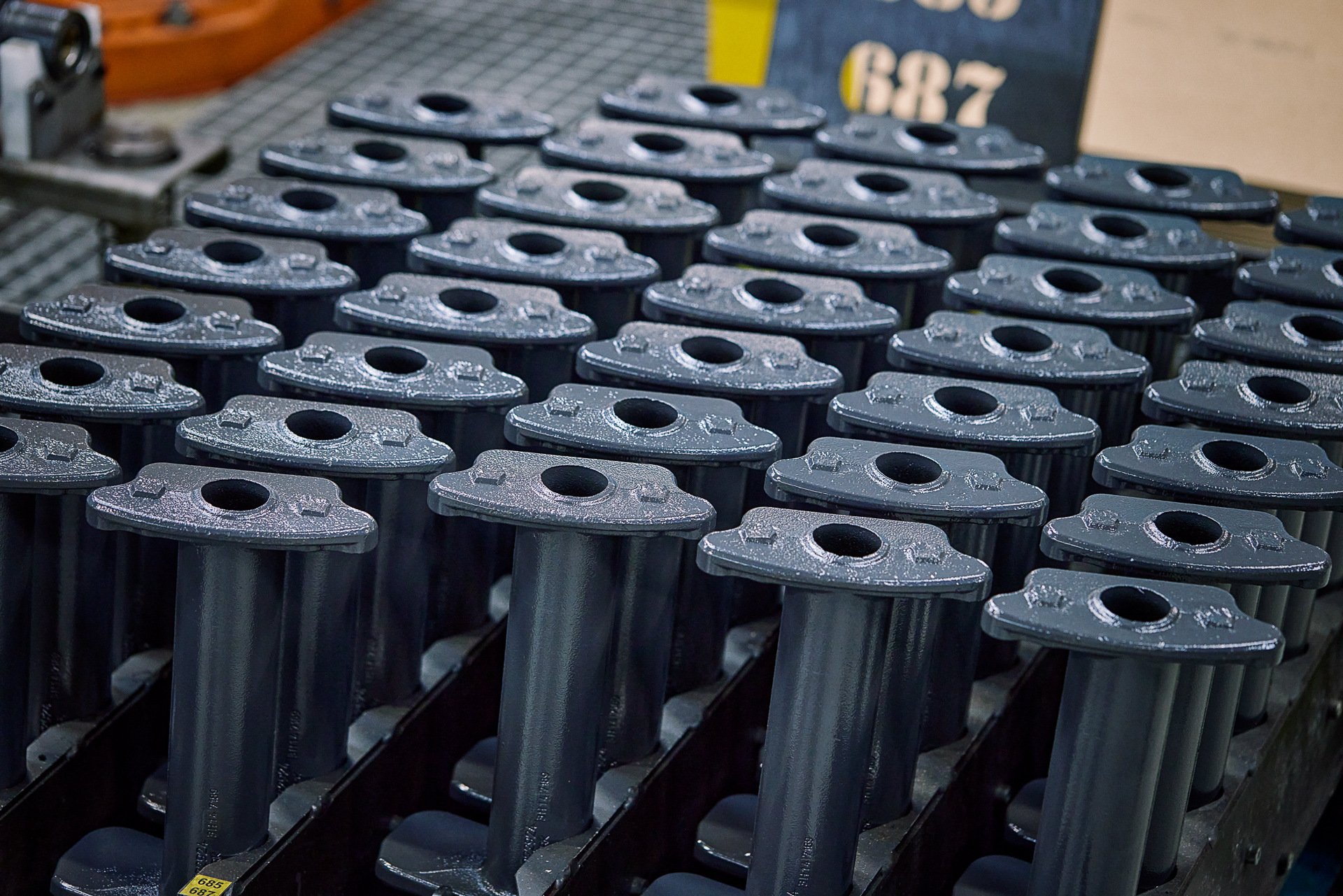
Cast iron vs welded components
Learn more about the key differences between cast iron and welded components
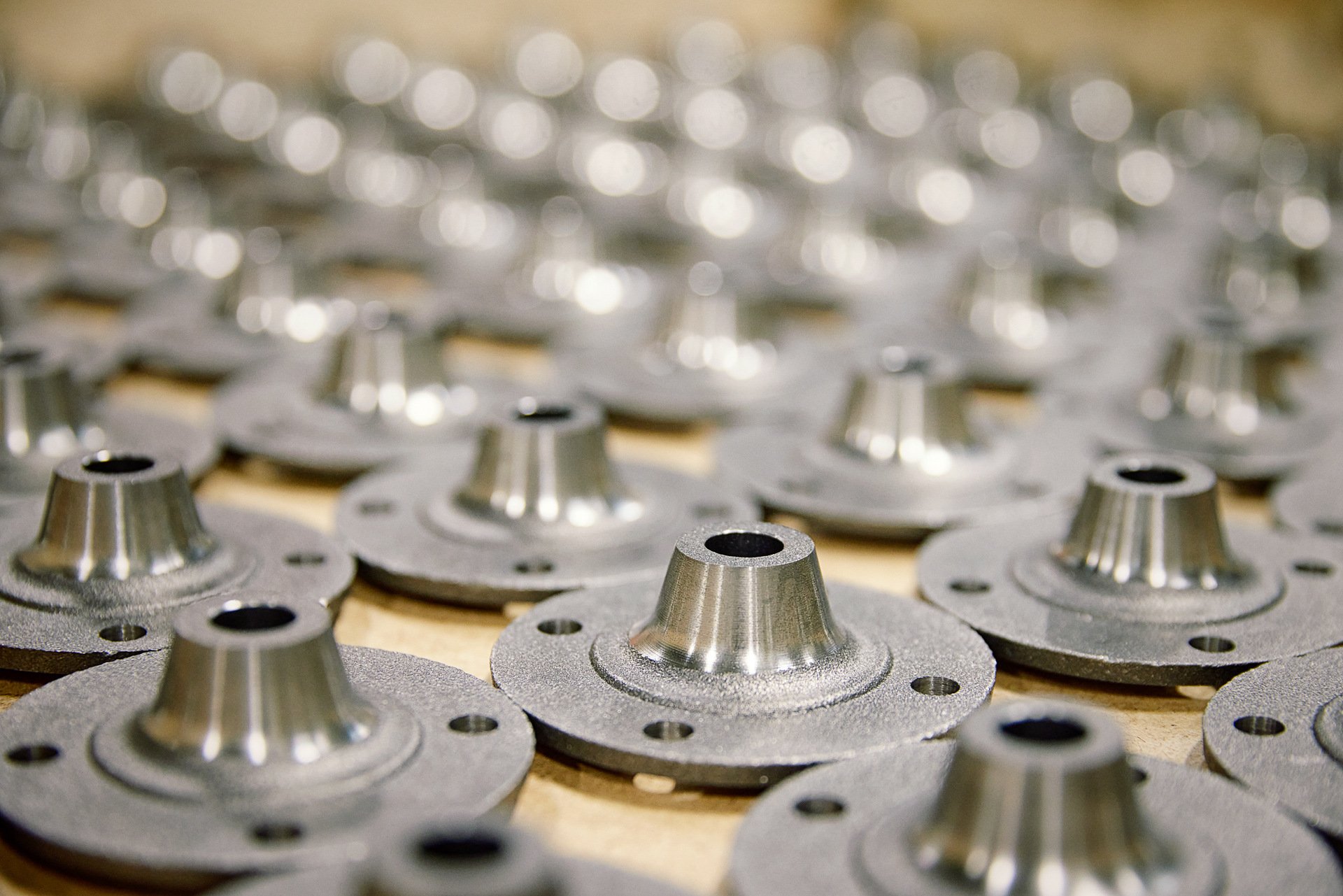
Cast iron vs aluminium
Learn about the advantages and key differences for choosing cast iron over aluminium.