
Which delivers the stronger business case?
In industrial OEM applications where vibration damping, dimensional stability and part consolidation matter, cast iron often delivers lower lifecycle cost and higher performance consistency than welded fabrication.
Across machinery bases, gear housings and structural components, this difference directly influences total cost of ownership and long-term operational stability. These structural and economic effects reflect the broader advantages of cast iron in industrial applications, particularly in stiffness-driven OEM systems.
Welded structures remain relevant for very large, low-volume or frequently modified designs. The real question is not which process is simpler. It is which solution reduces long-term cost and operational risk.
The fundamental difference
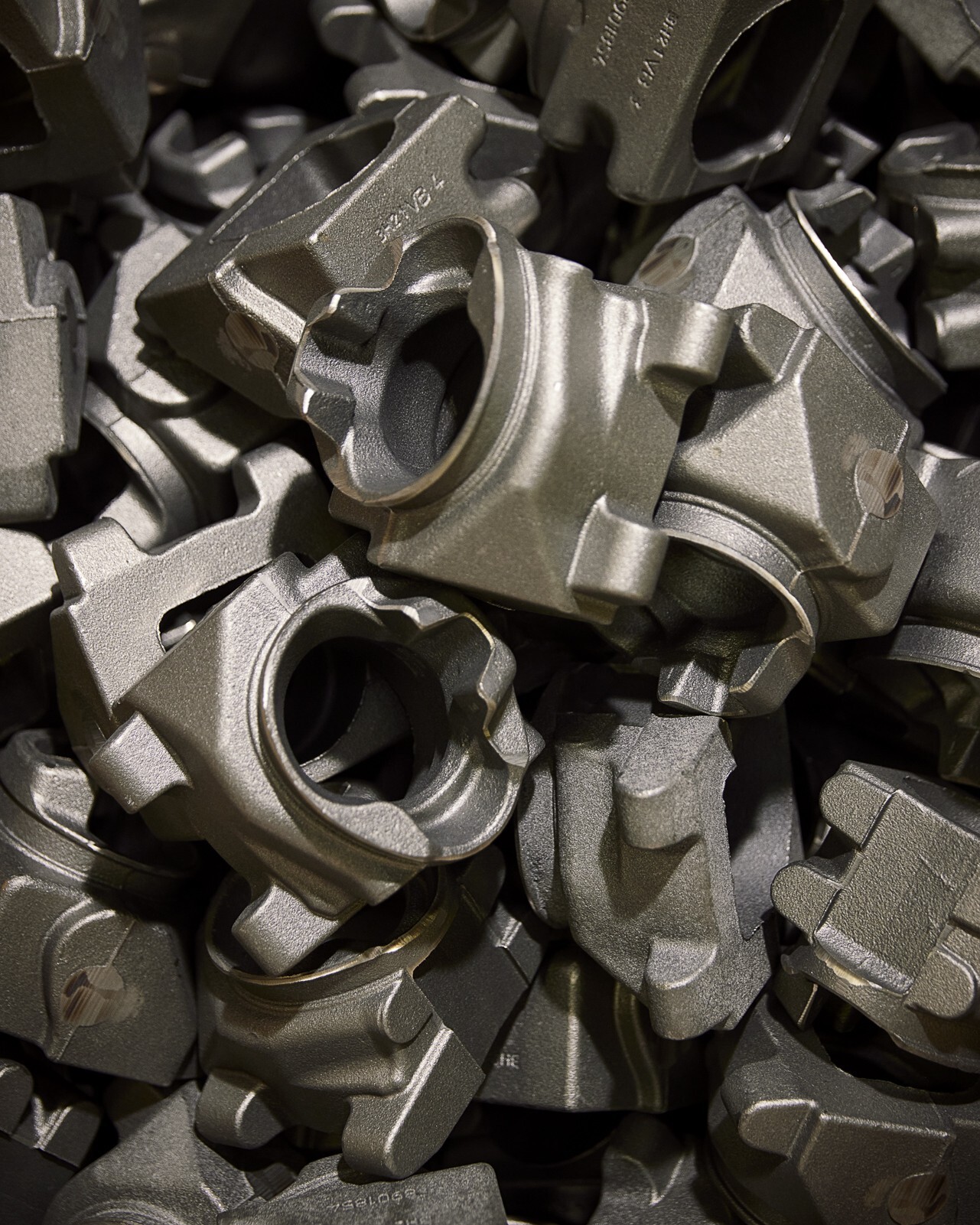
A cast iron casting is produced as a single integrated geometry in a mould. Ribs, mounting points, internal cavities and functional interfaces can be engineered into one component. This integration approach is frequently used in industrial casting projects to consolidate multiple fabricated parts into one stable geometry.
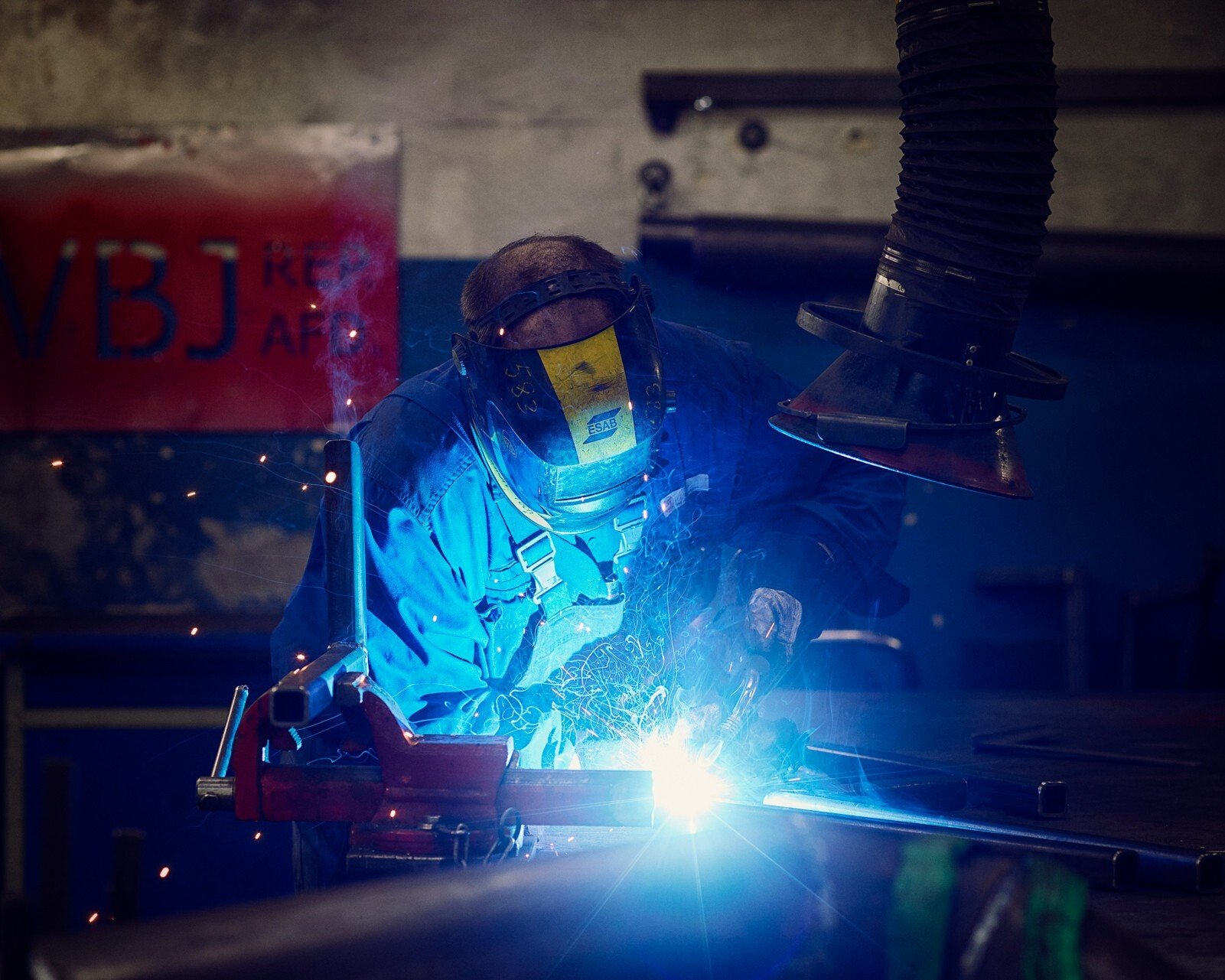
A welded steel fabrication is built by joining multiple plates, sections or machined parts. Structural integrity depends on weld quality, heat control and post-weld machining accuracy.
This difference explains why cast iron vs welded components behave differently in terms of repeatability, damping and lifecycle economics.
Structural behaviour under dynamic loads
Engineers often ask whether cast iron is strong enough compared to welded steel. The answer depends on grade selection and load case.
Ductile iron can achieve tensile strengths comparable to many structural steels while offering superior vibration damping. Grey iron provides lower tensile strength but significantly higher inherent damping due to its graphite microstructure. The internal performance range within the material family is further explored in ductile cast iron vs grey cast iron, where graphite morphology determines the balance between strength and damping.
In applications such as machinery bases, gear housings and pump housings, vibration damping reduces amplitude under cyclic loading. Lower vibration improves machining accuracy, limits noise and slows fatigue development.
Welded steel structures typically have lower damping capacity. In dynamic systems, this can increase fatigue sensitivity and require additional stiffening measures.
When dynamic performance influences warranty exposure, damping becomes a commercial variable — not just a material property.
Dimensional stability and process control
Another frequent concern is whether cast components distort more easily than fabricated structures.
In reality, welding introduces concentrated heat zones that create residual stresses and distortion. These must be managed through fixturing, stress relieving or additional machining.
Casting solidifies within controlled mould conditions. When gating and cooling are engineered correctly, dimensional behaviour becomes predictable across serial production.
For operations managers, predictable geometry means fewer tolerance deviations, reduced rework and more stable machining time per unit.
Similar stability considerations are discussed in cast iron vs aluminium components, where thermal expansion and stiffness influence dimensional predictability.
Where casting gains economic advantage
Is casting always more expensive? At prototype stage, it can appear so due to tooling investment. At medium to high production volumes, the economics often reverse.
Casting typically reduces total cost of ownership through integration of multiple parts into a single component, fewer welding and inspection hours, and reduced assembly complexity and supplier interfaces.
In casting programmes executed at scale, this consolidation effect is often the primary driver behind cost reduction when volumes increase.
Welded fabrication remains flexible in early development. As volumes grow, labour intensity and quality control requirements frequently increase overall cost.
Lifecycle value — not initial unit price — should guide the comparison between cast iron vs welded components.
Design freedom and functional integration
Casting enables internal channels, reinforcement ribs and mounting geometries to be integrated directly into the component. This reduces weld seams, fasteners and alignment steps.
In collaborative development projects, early casting feasibility assessments often unlock greater optimisation of stiffness, weight distribution and part consolidation.
Fabricated structures are constrained by plate geometry and welding accessibility. Complex load paths often require multiple subassemblies, increasing inspection and coordination effort.
When casting feasibility is assessed early in development, engineers gain greater freedom to optimise performance and lifecycle economics.
When cast iron is the right choice
Cast iron is commercially optimal when structural stability, vibration damping and part consolidation are critical, and where production volumes justify an integrated solution.
In many industrial systems, performance depends on stable geometry, reduced vibration and consistent behavior across serial production. Cast iron enables complex components to be produced as a single integrated casting, reducing assembly steps, weld-related distortion and tolerance variation.
Where welded structures rely on multiple parts, weld quality and post-processing, the trade-off shifts toward process complexity and lifecycle risk. In dynamic applications, cast iron’s inherent damping can further improve durability, noise levels and machining precision.
In such scenarios, the structural and economic advantages of cast iron often outweigh the flexibility of welded fabrication - particularly when evaluated across total cost of ownership.
Recognising these conditions clarifies where cast iron delivers a more robust and scalable long-term solution.
Sustainability and supply chain impact
Process selection also affects carbon footprint and supply stability.
Cast iron production typically incorporates high levels of recycled material. Modern foundries increasingly operate with renewable electricity and closed-loop sand systems.
Part consolidation reduces transport between sub-suppliers and simplifies logistics.
Welded assemblies may involve multiple fabrication stages across suppliers, increasing coordination complexity and Scope 3 reporting exposure.
For OEMs with ESG targets, early process selection materially influences long-term reporting and supply resilience. Sustainability considerations are therefore integrated into casting feasibility assessments rather than treated as a separate initiative.
In corrosion-sensitive applications, related trade-offs are analysed in cast iron vs stainless steel components, where corrosion resistance is weighed against structural efficiency and cost stability.

A practical decision framework
When evaluating cast iron vs welded components, focus on:
- Total cost of ownership rather than piece price
- Structural performance under real operating conditions
- Production repeatability and dimensional risk
- Supply chain complexity alongside ESG exposure.
For many industrial OEM components, cast iron provides a stable and scalable solution — particularly when assessed early in the design phase.
Assess your welded design
If a welded steel fabrication is currently specified, a structured casting feasibility review can determine whether vibration performance can be improved, whether multiple parts can be consolidated into one geometry, and whether dimensional stability can be increased across serial production.
The earlier this assessment is performed, the greater the technical and financial impact. In many cases, this analysis reinforces the long-term advantages of cast iron as a structurally integrated and scalable solution.
FAQ - Cast iron vs welded components
It depends on the application. Ductile cast iron can achieve high tensile strength while also providing better vibration damping and dimensional stability.
Its graphite structure absorbs vibrational energy, helping reduce noise, resonance and fatigue in dynamic systems.
Welded structures are often preferable for low-volume production, very large components or designs that change frequently during development.
Yes. Casting can consolidate multiple welded parts into one component, reducing assembly, machining and supply chain complexity.
Ductile (nodular) cast iron vs grey cast iron
Learn the differences between ductile- and grey cast iron.
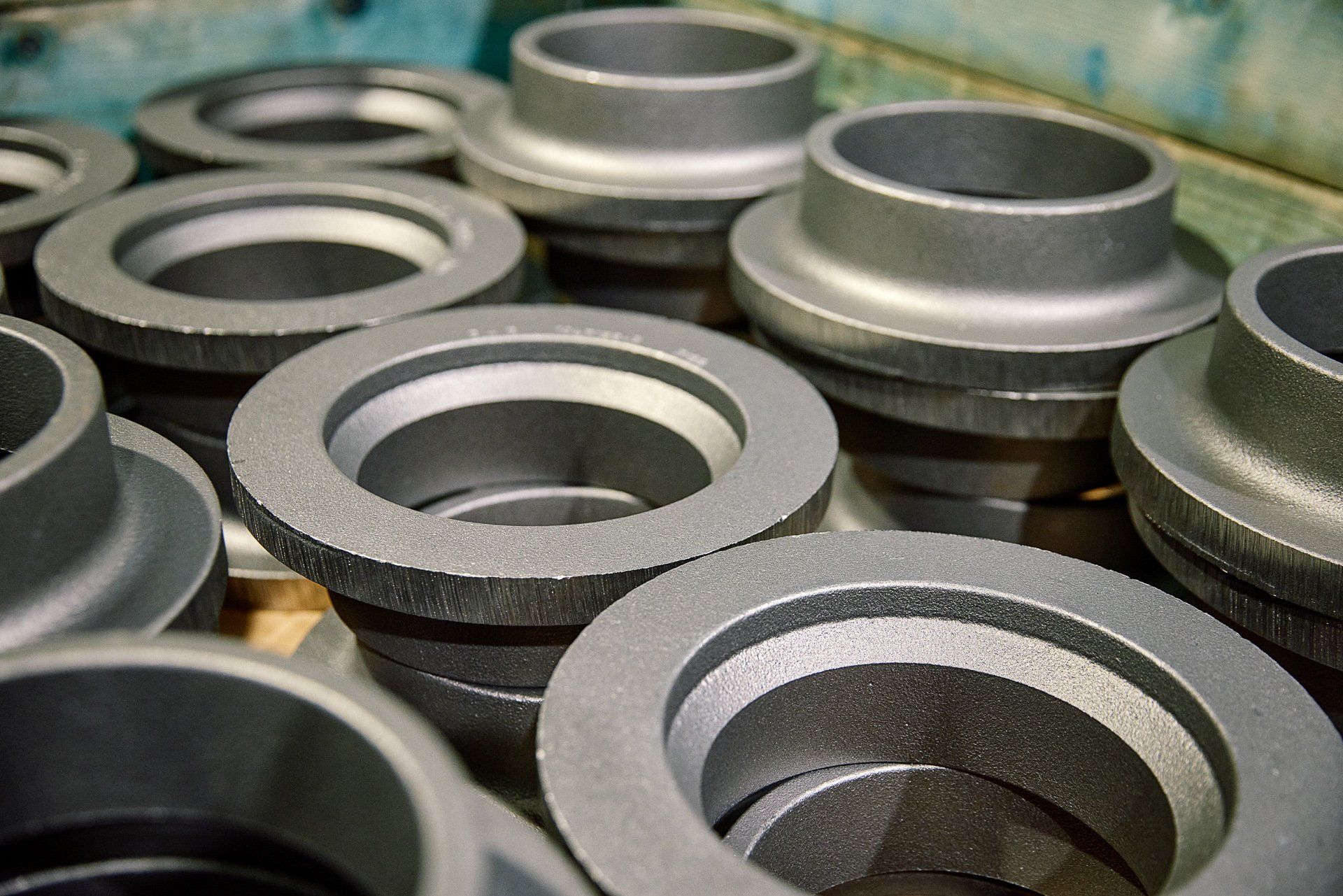
Cast iron vs stainless steel
Learn more about the advantages and key differences between cast iron and stainless steel.
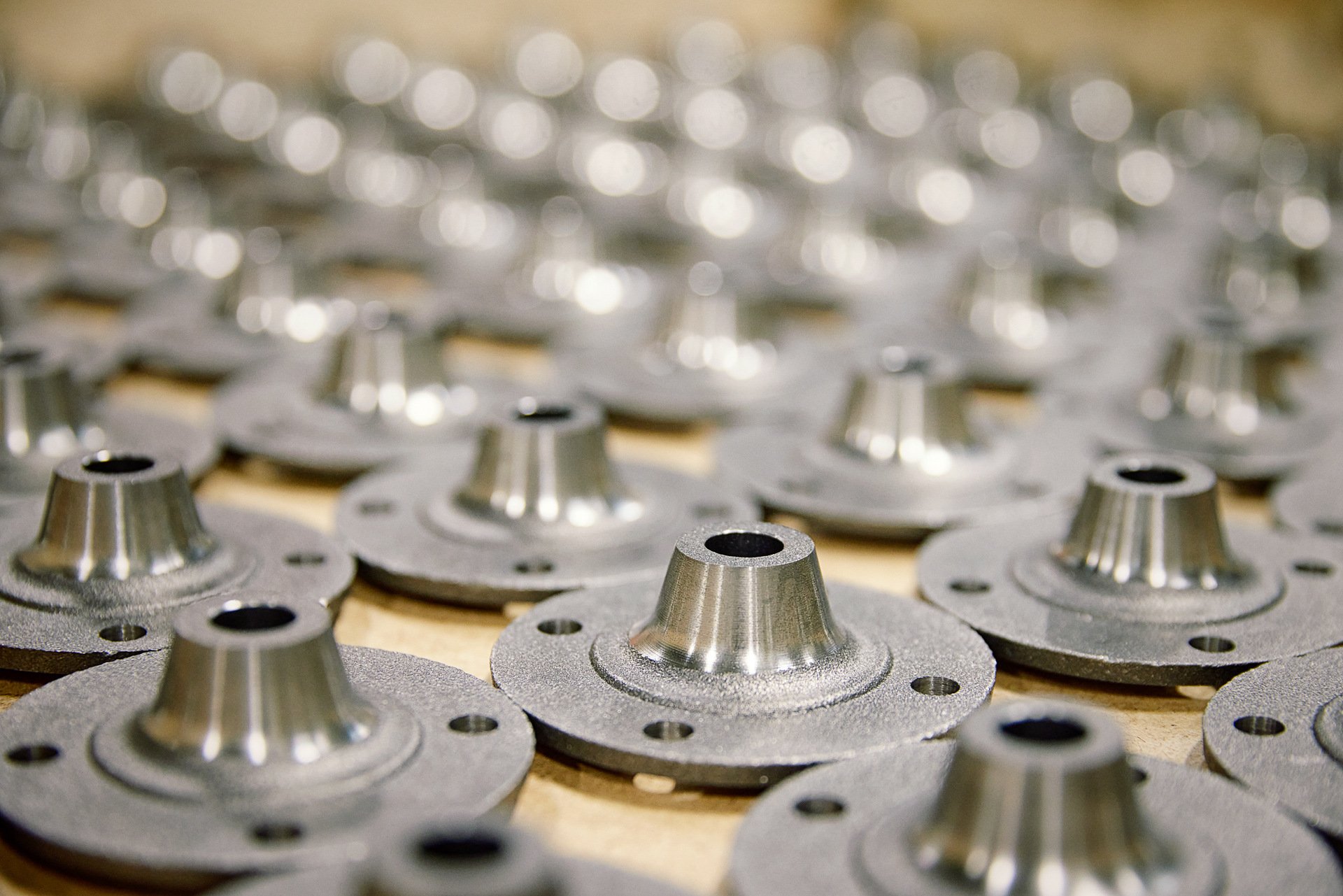
Cast iron vs aluminium
Learn about the advantages and key differences for choosing cast iron over aluminium.