
Ductile cast iron
vs grey cast iron
Expanding the structural advantages of cast iron
Ductile cast iron vs grey cast iron is not a competition between two unrelated materials. It is a demonstration of one of the core advantages of cast iron: performance flexibility within a single material family.
Through controlled graphite morphology, cast iron can be engineered either for vibration damping and dimensional stability or for tensile strength and fatigue resistance.
For engineering evaluation, the critical question is not which grade is stronger in isolation, but how cast iron’s microstructural adaptability reduces structural risk across different load cases.
The foundation of performance flexibility
The defining distinction between ductile and grey cast iron lies in graphite shape.
In grey cast iron, graphite forms interconnected flakes within the metallic matrix. These flakes interrupt stress paths and act as internal stress concentrators. As a result, grey iron exhibits limited tensile ductility but exceptional vibration damping and compressive stability.
In ductile cast iron, magnesium treatment modifies the graphite into rounded nodules. These spheroidal particles distribute stress more uniformly throughout the ferritic or pearlitic matrix, significantly improving tensile strength, elongation and fatigue resistance.
Under microscopic examination, the difference is visually distinct. Grey iron contains sharp, plate-like graphite flakes embedded within the matrix, whereas ductile iron presents evenly dispersed spherical nodules.
This transformation from flake to nodular graphite is what expands the structural capability of cast iron. It allows the same base material system to operate either as a damping-optimised solution or as a mechanically resilient engineering alloy.
That flexibility is a structural advantage in itself.
Mechanical properties and structural implications
Typical property ranges illustrate how cast iron spans a wide performance envelope.
Tensile strength for grey cast iron typically ranges from approximately 150 to 350 MPa, whereas ductile cast iron commonly ranges from 400 to 900 MPa depending on grade. Elongation in grey iron is generally limited to around 0–1 percent, while ductile iron may range from 2 to 18 percent. Both materials provide high compressive strength, although ductile grades often exceed grey iron in combined load performance. Grey iron delivers very high vibration damping, while ductile iron offers moderate damping with substantially improved fatigue resistance.
Grey cast iron performs exceptionally well in compression-dominated structures and vibration-sensitive systems. Ductile cast iron extends cast iron’s performance envelope into tensile loading, cyclic stress and safety-critical applications.
This breadth of capability demonstrates a central advantage of cast iron: it can be specified to match structural demand without abandoning the material family.
Stability and structural resilience within one system
Grey cast iron is widely used in machinery bases, engine blocks, pump housings and components where vibration control and dimensional stability are critical. Its inherent damping reduces resonance, limits noise transmission and stabilises machining behaviour.
Ductile cast iron is typically specified for suspension components, structural brackets, wind turbine hubs, pressure-containing parts and mechanically loaded components exposed to tensile or cyclic stress. Its ability to absorb energy before fracture significantly reduces brittle failure risk and extends fatigue life.
Rather than representing opposing materials, these grades illustrate how cast iron adapts to different structural priorities. Where compression and vibration dominate, grey iron delivers stability. Where tensile stress and impact exposure increase, ductile iron provides resilience.
This internal adaptability reduces the need to substitute into steel or alternative materials prematurely.
A managed engineering trade-off
The core engineering trade-off between grey and ductile cast iron lies between damping efficiency and mechanical ductility.
Grey iron’s flake graphite absorbs vibrational energy and protects systems from stress amplification. These damping characteristics are particularly relevant in comparisons such as cast iron vs aluminium components, where vibration control influences lifecycle performance. Ductile iron sacrifices some damping capacity in exchange for tensile strength, elongation and fracture resistance.
In vibration-sensitive industrial equipment, damping reduces lifecycle service risk and improves operational precision. In tensile-loaded structures, ductility reduces catastrophic failure exposure and improves safety margins.
Because both options exist within the cast iron system, engineers can manage this trade-off without abandoning the broader structural and economic advantages of cast iron.
Production, machinability and scalability
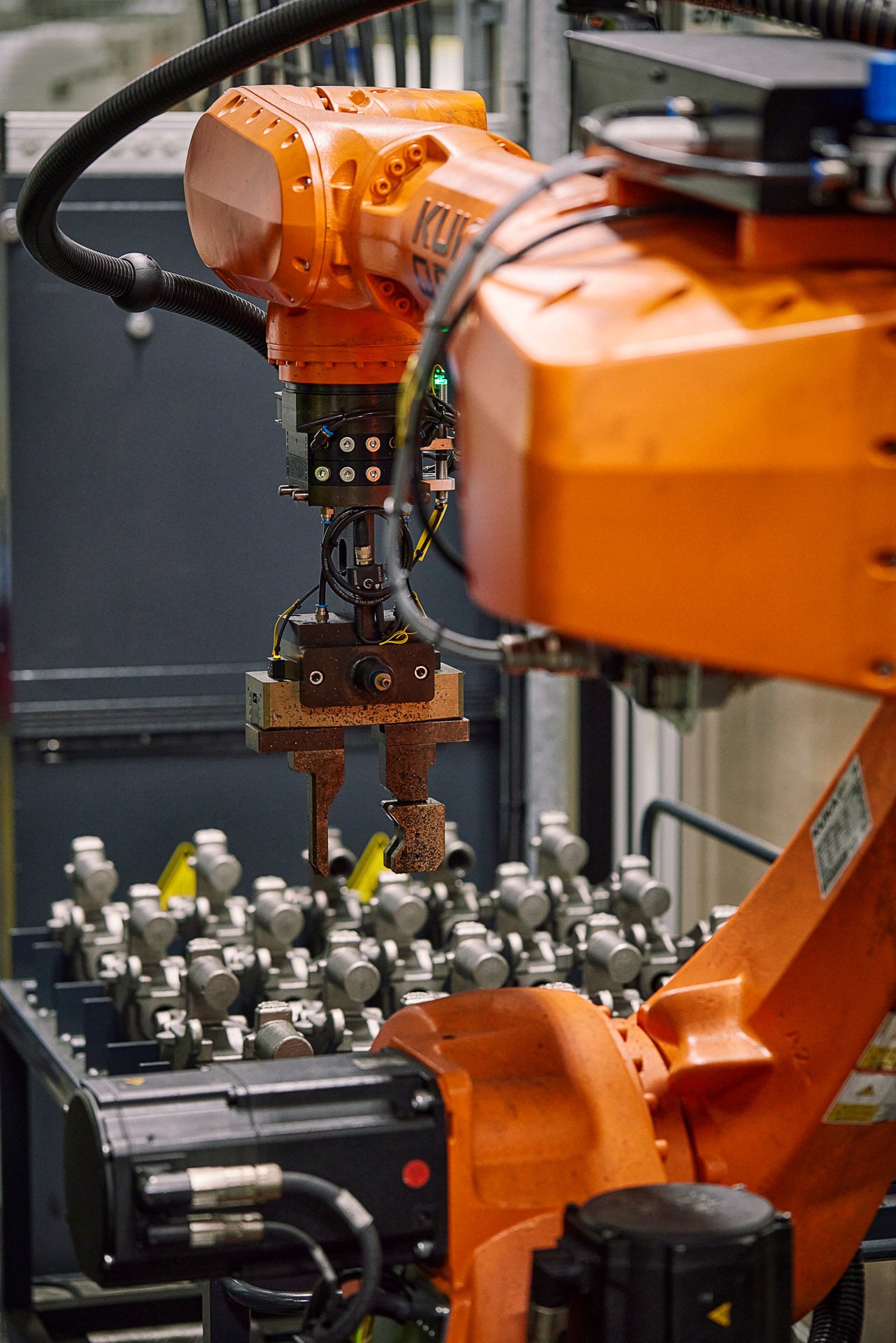
Both grey and ductile cast iron offer strong manufacturability in serial production.
Grey cast iron typically provides slightly better machinability due to graphite lubrication effects and lower tensile strength. Ductile cast iron, particularly higher-strength EN-GJS grades, requires tighter process control but remains highly scalable with modern foundry technology.
From a production standpoint, ductile iron involves magnesium treatment and more controlled solidification management. However, once process control is established, consistent mechanical performance can be achieved across large production volumes.
This scalability reinforces another advantage of cast iron: performance differentiation without process instability.
Cost and lifecycle positioning
Grey cast iron generally offers lower production cost due to simpler processing and lower alloying requirements.
Ductile cast iron may involve additional treatment steps and stricter quality control. However, when it enables substitution of welded steel structures, eliminates overdesign or improves fatigue performance, it can deliver significant total system cost advantages. In corrosion-sensitive contexts, the structural trade-offs are further examined in cast iron vs stainless steel components, where corrosion resistance must be balanced against damping and cost efficiency.
Evaluating lifecycle cost through the lens of performance risk clarifies that ductile iron often reduces structural uncertainty in load-bearing systems, while grey iron optimises cost efficiency in stability-driven applications.
The economic strength of cast iron lies in its ability to balance performance and cost within the same material platform.
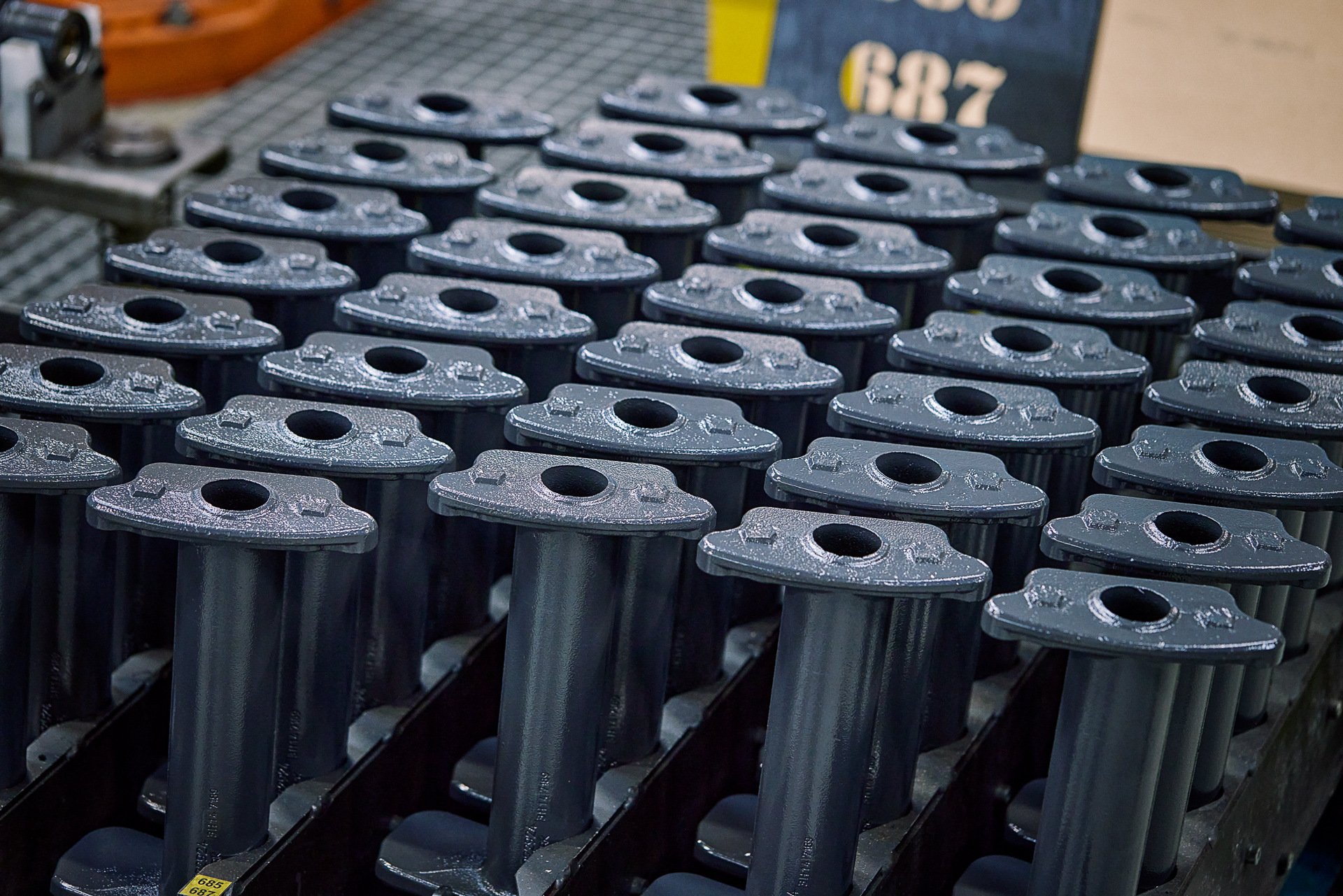
This balance becomes particularly powerful when cast iron enables substitution of fabricated structures, as analysed in cast iron vs welded components, where structural integration reduces assembly complexity and lifecycle risk.
Sustainability considerations
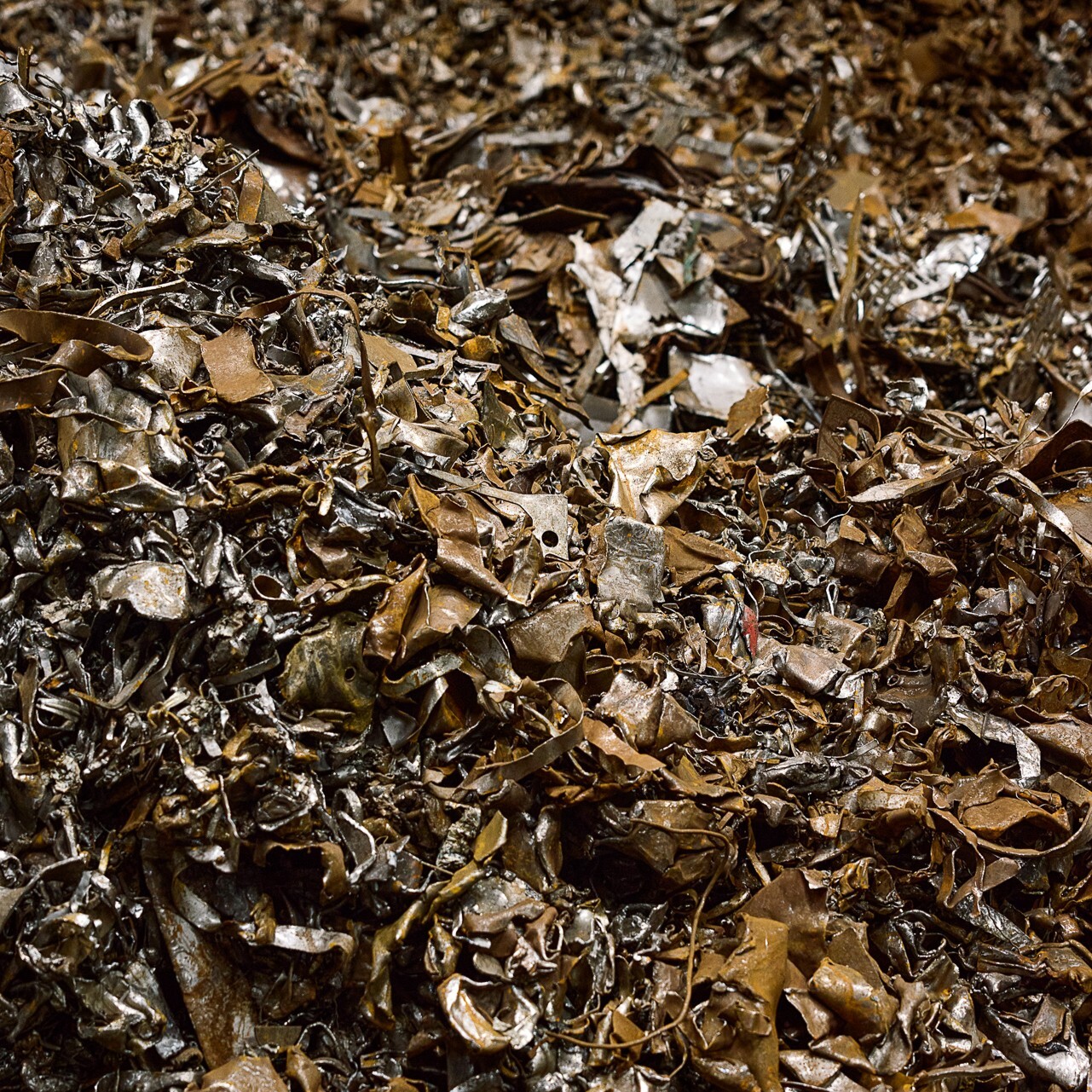
Both ductile and grey cast iron are typically produced using high levels of recycled scrap.
The environmental difference between flake and nodular graphite grades is marginal compared to substitution decisions involving steel or aluminium. Sustainability performance is therefore primarily influenced by durability, part consolidation potential and production energy mix rather than grade selection alone.
Because cast iron grades can be matched precisely to structural demand, unnecessary over-specification and material waste can often be avoided. This alignment supports resource efficiency across the product lifecycle.
Material selection as risk management
Choosing between ductile cast iron and grey cast iron is not simply a strength comparison. It is a structural risk-management decision shaped by load orientation, fatigue exposure and failure consequences.
Grey cast iron reduces operational risk in vibration-sensitive and compression-dominated systems by stabilising geometry and absorbing dynamic energy. Ductile cast iron reduces structural risk in components exposed to tensile stress, cyclic loading or safety-critical requirements.
The ability to select the appropriate graphite morphology within the cast iron family allows engineers to minimise long-term structural uncertainty without shifting to fundamentally different material systems.
This flexibility is one of the defining advantages of cast iron in industrial engineering, reinforcing its structural relevance across diverse load cases.
FAQ - Ductile cast iron vs grey cast iron
Yes, particularly in tensile strength, elongation and fatigue resistance. Grey iron remains highly effective in compression-dominated applications.
Its flake graphite structure absorbs vibrational energy more effectively than nodular graphite, reducing resonance and noise transmission.
In many structural applications, yes. Ductile iron can provide sufficient tensile strength and fatigue resistance while maintaining casting advantages.
Grey cast iron is generally lower cost per component. Ductile cast iron may reduce total system cost in tensile-loaded or safety-critical applications.
Cast iron vs welded components
Learn more about the key differences between cast iron and welded components
Cast iron vs stainless steel
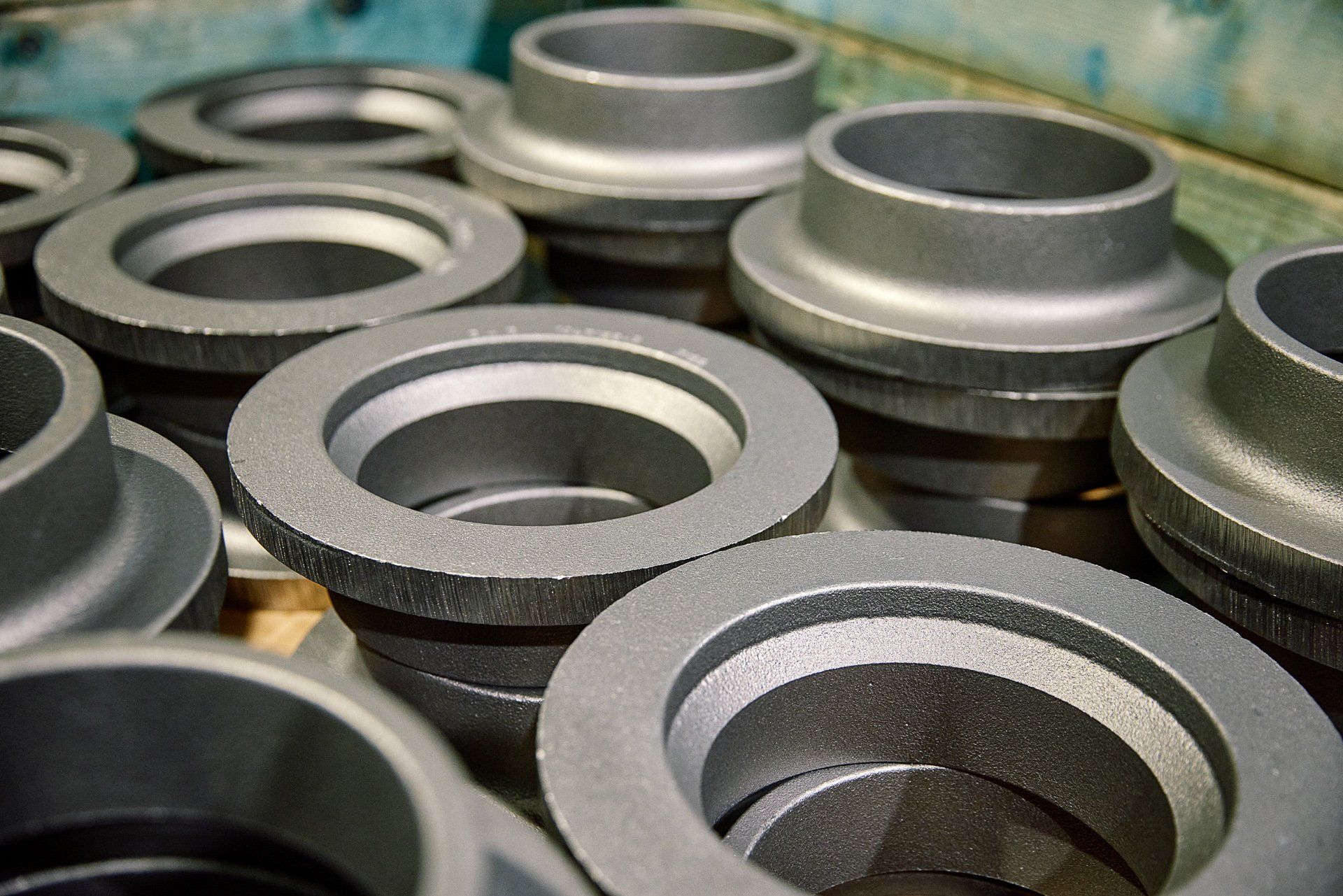
Learn more about the key differences between cast iron and stainless steel. Choose the correct material for your applications.
Cast iron vs aluminium
Learn about the advantages and key differences for choosing cast iron over aluminium.